TXR Capital sofisticated-Investor play
Generational Whealth
Cash flowing since day 1
Discover how TXR Capital structures multifamily assets to produce stable cash flow from day one while protecting investor downside.
No obligation: decide if this multifamily strategy fits your portfolio.
Business Model
A Clear, Cash-Flowing Multifamily Model
TXR Capital targets Value add multifamily assets that produce stabilized income from day one, then unlock additional upside through disciplined value-add execution.
How the strategy works
We acquire stabilized or near-stabilized multifamily properties in strong growth markets, using conservative leverage and business plans that prioritize immediate cash flow plus long-term equity growth.
- Acquire: Class B/B+ multifamily in landlord-friendly, high-demand markets with strong rent fundamentals.
- Stabilize: Optimize operations, address deferred maintenance, and implement targeted value-add improvements.
- Cash flow: Structure deals to pay preferred returns from in-place income with conservative assumptions.
- Grow equity: Increase net operating income to drive asset value and create multiple exit options.
Key deal characteristics
Target asset class: Institutional-quality multifamily
Strategy focus: Cash flow first, value-add second
Hold period: Typically 3 to 5 years
Risk profile: Income-focused with downside protection
The Investor Problem
Volatile, low-yield options that fail to protect capital
Most investors are stuck choosing between stock-market volatility, ultra-low bond yields, or speculative alternatives that offer little visibility into actual cash flow and downside risk.
- Traditional income strategies are struggling to outpace inflation.
- Equity markets can erase years of gains in a single quarter.
- Many private deals are opaque, with limited reporting and control.
- Investors lack access to institutional-quality real estate execution.
Market Potential
Why multifamily remains a durable growth engine
Housing demand, constrained supply, and demographic tailwinds create a resilient backdrop for well-selected multifamily assets, even across economic cycles.
Enduring demand
Household formation, population growth, and affordability challenges continue to drive long-term rental demand in key U.S. markets.
Constrained supply
New construction has not kept pace with demand in many metros, supporting occupancy and rental growth for existing, well-located multifamily assets.
Institutional interest
Pension funds, insurance companies, and family offices continue to allocate heavily to multifamily, validating the asset class for income-focused investors.
Our Solution
Cash flow from day one, with institutional discipline
TXR Capital structures each acquisition so that investor distributions are supported by in-place income, not aggressive future assumptions.
- Prioritize stabilized, income-producing assets in proven locations.
- Underwrite with conservative rent growth and expense assumptions.
- Deploy targeted value-add programs to enhance NOI and property quality.
- Align sponsor and investor incentives through meaningful co-investment.
Property thesis in one view
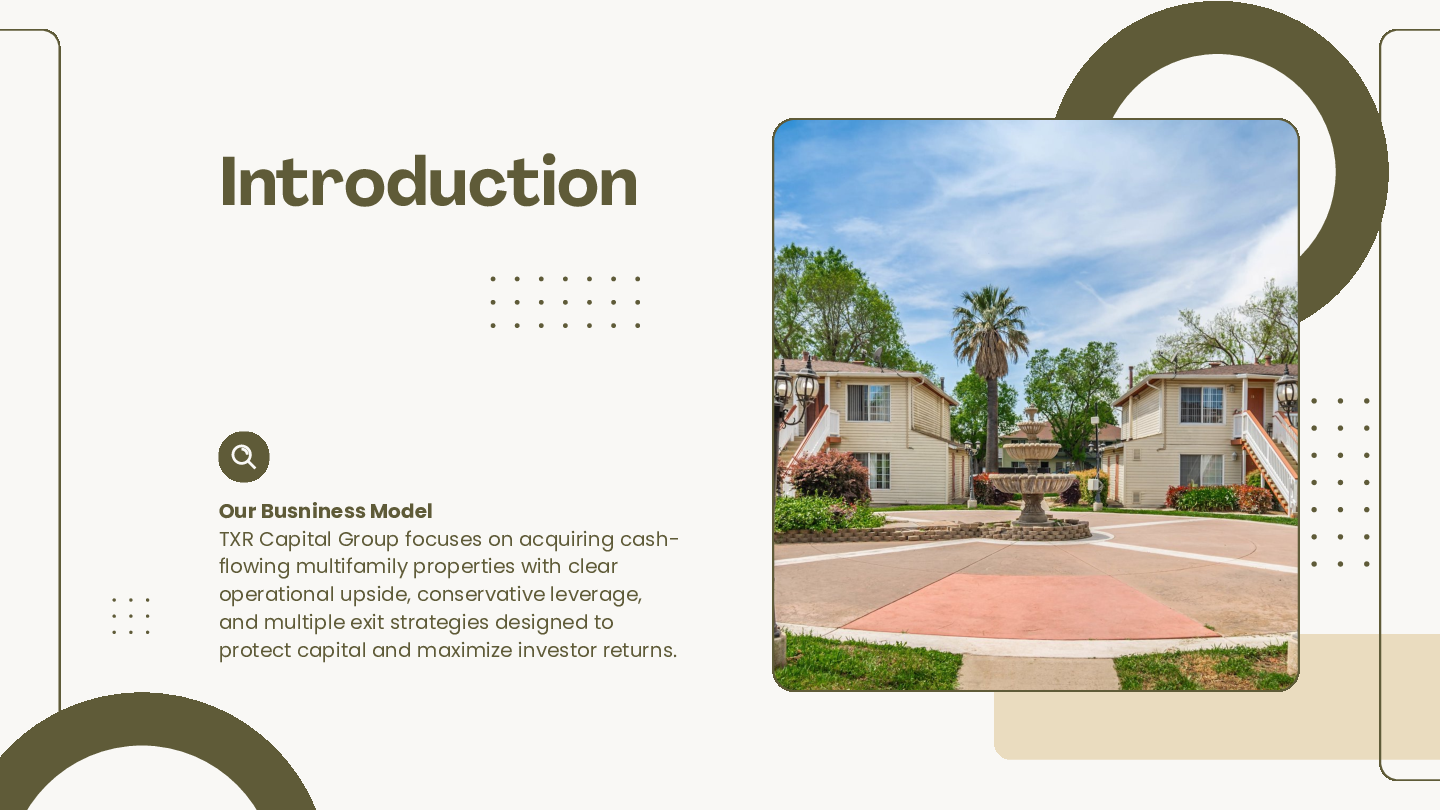
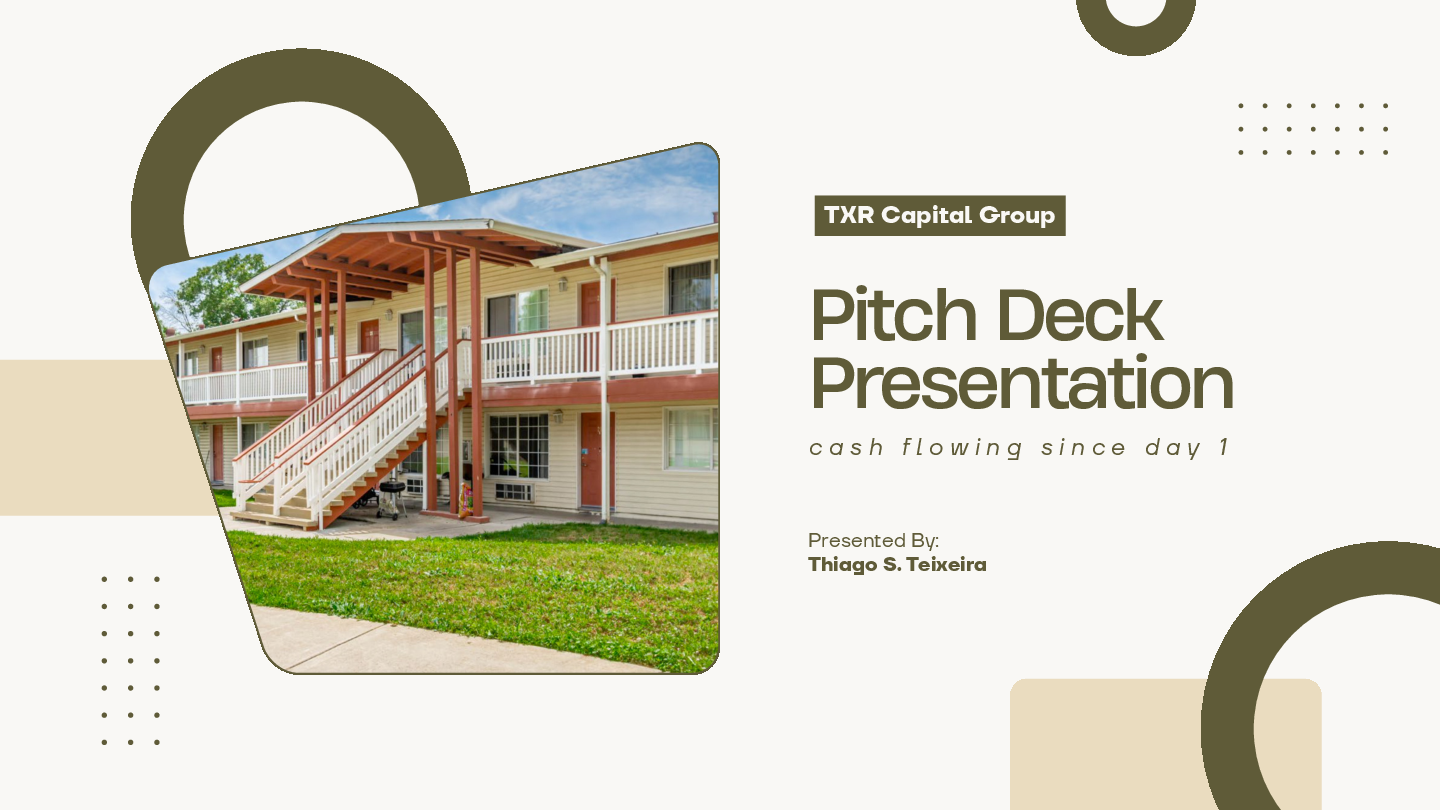
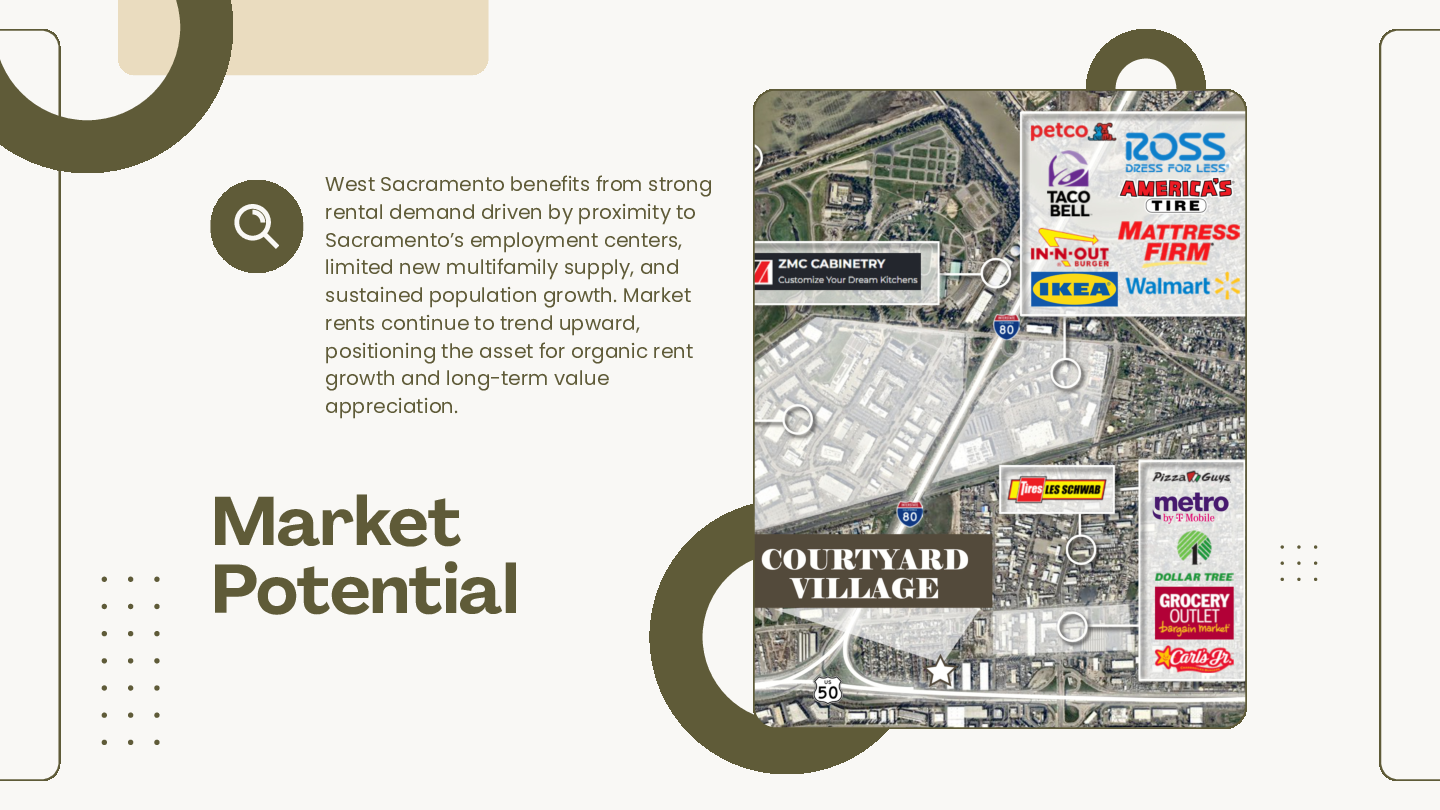
The Syndication Strategy walks through the specific property, location drivers, capital stack, and projected investor returns in this framework.
Investor Benefits
Turn capital into predictable cash flow and long-term equity
The pitch deck details projected returns, but at a high level investors participate in three powerful sources of value creation.
1. Ongoing cash distributions
Preferred returns sourced from in-place rental income, designed to deliver reliable quarterly cash distributions to investors.
2. Equity growth
Value-add improvements and operational excellence drive higher NOI, which compounds investor equity over the life of the investment.
3. Tax efficiency
Depreciation and strategic exit planning can help offset income and enhance after-tax returns, depending on each investor's situation.
You will see detailed assumptions, sensitivity analysis, and how TXR Capital is aligned alongside you in the deal.
Growth Strategy
A disciplined roadmap from acquisition to exit
Investors follow a transparent, step-by-step plan from initial diligence through hold period and ultimate capital event.
Phase 1: Diligence & capital raise
- Source and evaluate target property.
- Complete underwriting, inspections, and third-party reports.
- Release full pitch deck and host investor webinars.
- Finalize capital commitments and close on the asset.
Phase 2: Stabilization & value-add
- Implement operational improvements and asset management plan.
- Execute targeted renovations where ROI is compelling.
- Monitor performance against underwriting and adjust as needed.
- Distribute regular updates and cash distributions to investors.
Phase 3: Optimization & exit
- Continue optimizing operations and monitoring capital markets.
- Evaluate refinance, recapitalization, or sale based on risk-adjusted returns.
- Return capital and profits to investors at the end of the hold period.
- Share a detailed close-out report summarizing performance.
The Syndication Strategy includes a detailed timeline, including key decision points and reporting cadence, so you always know what happens next.
Ready to invest ?
Whether you’re a prospective investor or a multi-family property owner, the TXR Capital team is here to help.
Fill Out Our Quick Form To Get in Touch
By clicking "Submit,” I agree to receive recurring messages from TXR Capital to the provided mobile number and also agree to the TXR Capital terms and privacy policy found on go.txrcap.com/syndication. Message & data rates may apply.
Prefer a conversation first? Fill out the form above to schedule a call with us and walk through the syndication opportunity.